
Why Knee Pain Increases After 40: 7 Daily Mistakes That Secretly Weaken Your Joints

knee pain after 40
If you are over 40 and experiencing knee pain, morning stiffness, or discomfort while walking, there is something important you need to understand clearly: in most cases, these problems are not simply caused by age.
Yes, aging plays a role — but the real issue often lies in small daily habits that slowly weaken your joints from the inside. These are everyday mistakes that many people unknowingly repeat for years. Over time, these habits damage cartilage, reduce lubrication, slow circulation, and increase inflammation — leading to pain and stiffness.
In this article, we will explore seven common daily mistakes that silently harm your joints, along with practical ways to correct them
Understanding Joint Pain After 40
Before discussing the mistakes, it’s important to understand one key point:
A joint is not just a bone.
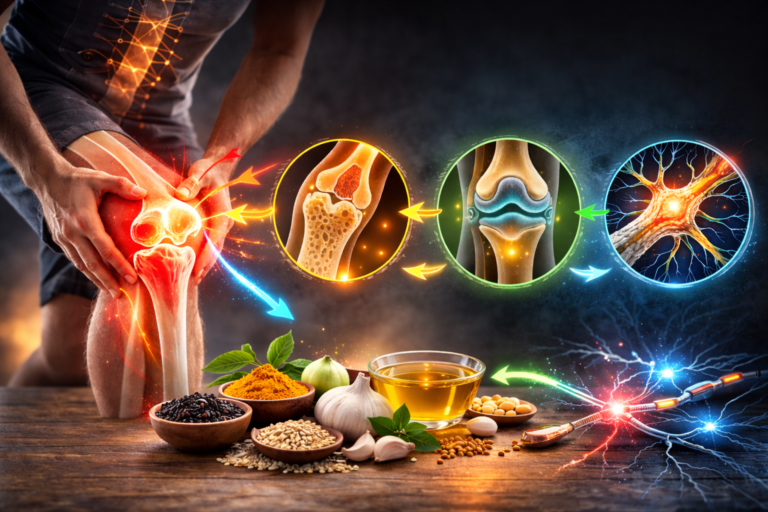
A joint is a complete system that includes:
- Cartilage
- Synovial fluid (joint lubrication)
- Ligaments
- Nerves
- Blood circulation
When pain appears, it usually means multiple parts of this system are affected — not just the bones.
Mistake #1: Thinking Joint Pain Is Only a Bone Problem
One of the most common mistakes is assuming that joint pain is simply due to weak bones.
Many people immediately start taking calcium or vitamin D supplements when knee or back pain begins. While these nutrients are important, they are not the full solution.
If the cartilage is worn down, lubrication is reduced, or inflammation is present, calcium alone cannot fix the problem.
Why This Is a Problem
Focusing only on bone strength ignores:
- Joint lubrication
- Inflammation control
- Blood circulation
- Tissue repair
This is why many people say:
“I’m taking calcium and vitamin D, but the pain isn’t going away.”
The issue has moved beyond the bone.
What You Should Do Instead
If you are taking calcium, also support your joints with:
- Lubrication support – Add one teaspoon of pure ghee with meals daily (in moderation).
- Circulation support – Consume 1–2 cloves of garlic in the morning (if suitable for you).
- Inflammation control – Drink warm turmeric milk at night with a pinch of black pepper.
This approach supports the entire joint system — not just the bones.
Mistake #2: Relying on Painkillers for Long-Term Relief
Painkillers reduce discomfort quickly, which can feel like the problem is under control.
But painkillers only block pain signals. They do not stop joint damage.
While the pain feels better, cartilage may continue wearing down, inflammation may persist, and dryness may worsen.
Over time:
- Painkillers become less effective.
- Higher doses may be required.
- Side effects increase.
When Are Painkillers Acceptable?
Occasional use during severe pain is reasonable.
But using them daily without addressing the root cause is a major mistake.
Better Long-Term Strategy
- Control inflammation naturally.
- Improve lubrication.
- Maintain healthy movement.
- Support circulation.
Focus on healing, not just suppressing symptoms
Mistake #3: Avoiding Healthy Fats Completely
Many people over 40 reduce fat intake drastically in an attempt to stay healthy.
While excessive unhealthy fats are harmful, completely eliminating healthy fats can damage joint health.
Joints need lubrication. Cartilage needs nourishment. Certain vitamins (like vitamin D) require fat for proper absorption.
Without healthy fats:
- Cartilage becomes dry.
- Joints feel stiff.
- Nerves become more sensitive.
- Vitamin absorption decreases.
What To Do
- Include small amounts of natural fats like ghee or cold-pressed oils.
- Avoid refined oils.
- Maintain portion control — balance is key.
The issue is not fat itself. The issue is imbalance
Mistake #4: Excess Consumption of Cold Foods and Drinks
Cold water, refrigerated foods, late-night yogurt, and soft drinks may seem harmless — but frequent consumption can worsen joint stiffness.
Many people notice:
- Increased stiffness in winter
- More discomfort in cold mornings
Cold exposure can:
- Reduce blood circulation
- Increase stiffness
- Aggravate inflammation
Healthier Alternatives
- Start your morning with lukewarm water.
- Avoid very cold drinks, especially at night.
- Keep joints warm during winter.
- Limit cold dairy products in the evening.
Improved circulation supports better joint mobility
Mistake #5: Eating Heavy Meals Late at Night
Late dinners and heavy meals (especially fried or rich foods) slow digestion.
When digestion is weak:
- Inflammatory compounds increase
- Metabolic waste accumulates
- Morning stiffness worsens
Many people wake up feeling:
- Heavy joints
- Reduced flexibility
- Discomfort during initial movement
Better Habit
- Finish dinner by 7–8 PM.
- Keep dinner light and simple.
- Avoid overeating at night.
Your body repairs itself at night — don’t overload it during that time
Mistake #6: Choosing the Wrong Type of Movement
Joint health requires balance.
Two extremes are equally harmful:
Extreme 1: Complete Rest
Some people stop all movement due to pain.
But inactivity reduces circulation, weakens muscles, and stiffens joints.
Extreme 2: Over-Exercising
Others push through pain aggressively.
Excessive strain increases cartilage wear and raises injury risk.
The Correct Approach
- Gentle daily walking
- Light stretching
- Low-impact exercises
- Consistency over intensity
Consistency matters more than intensity.
Regular moderate movement improves:
- Lubrication
- Muscle support
- Circulation
- Joint flexibility
Mistake #7: Not Drinking Enough Water
Hydration is often underestimated in joint health.
Synovial fluid — the natural lubricant inside joints — depends on hydration.
When water intake is low:
- Cartilage dries out
- Friction increases
- Nerves become irritated
Dehydration also worsens inflammation.
What To Do
- Drink adequate water throughout the day.
- Reduce excessive caffeine and alcohol.
- Monitor urine color (light yellow is ideal).
Hydration is foundational for joint lubrication
The Most Dangerous Mistake: Accepting Pain as “Normal Aging

Many people over 40 believe:
“I’m getting older. Pain is normal.”
Aging is natural.
Chronic pain is not.
Some people in their 60s and 70s walk confidently and climb stairs easily. Others struggle in their 40s.
The difference is not just age.
The difference is lifestyle.
Joint pain develops slowly — as a result of years of habits. The good news? Habits can be changed
How Joint Damage Actually Develops
Joint problems usually follow this pattern:
- Poor nutrition
- Reduced circulation
- Increased inflammation
- Dehydration
- Weak muscles
- Cartilage thinning
- Pain and stiffness
Reversing the pattern means correcting the habits step by step
A Simple Daily Routine for Better Joint Health
Here is a balanced daily framework:
Morning
- Drink warm water.
- Light stretching.
- Gentle walking.
- Optional: garlic (if tolerated).
During the Day
- Stay hydrated.
- Avoid prolonged sitting.
- Include moderate healthy fats.
Evening
- Eat light dinner before 8 PM.
- Avoid cold foods at night.
Night
- Warm turmeric milk (if suitable).
- Proper sleep (7–8 hours).
Consistency matters more than perfection
Final Thoughts
Joint pain after 40 is not always a sign of irreversible aging. It is often a signal — a warning from your body that certain habits need adjustment.
Joint health depends on:
- Balanced nutrition
- Proper hydration
- Controlled inflammation
- Healthy circulation
- Consistent gentle movement
Pain does not appear overnight. It builds over years. But improvement also builds — gradually.
Start correcting one mistake at a time.
Your joints will respond
👉 Read the Hindi version https://harbalhome.com/joint-health-ke-liye-daily-routine